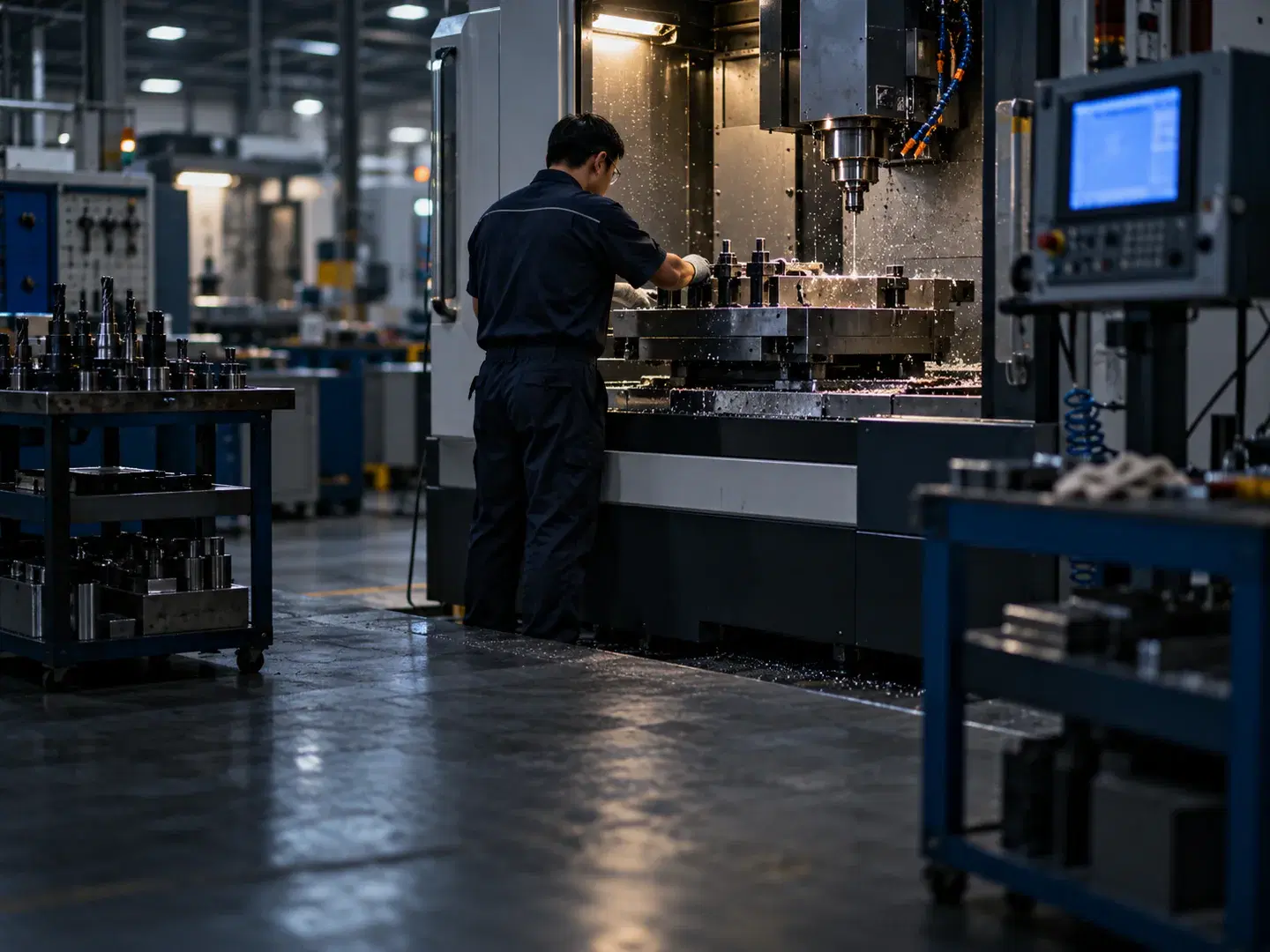
Manufacturing
Connecting the plant floor to the systems that plan it — production data, quality and maintenance in one operational picture.
Service
We design and build the operational systems that run a business — order management, scheduling, pricing, compliance and the integrations that hold them together.
01Overview
Custom software is the right answer less often than vendors suggest, and more often than procurement policy allows. The test is simple: if the process is a genuine competitive difference, encoding it in someone else's product means giving that difference up.
Where custom is justified, the risk is not writing the code — it is the seams. Most enterprise systems fail at integration boundaries, data ownership and the assumption that a migration will be clean. We map those explicitly before committing to an architecture.
We build with boring, well-supported technology on purpose. A system that runs for a decade is worth more than one that used an interesting framework for its first year.
02Capabilities
Multi-tenant, role-aware systems with the auditability and access control that regulated environments require.
Connecting ERP, CRM, warehouse and finance systems so data moves once and reconciles cleanly.
Incremental replacement behind a stable interface — the old system keeps running while the new one takes over piece by piece.
Versioned, documented interfaces that partners and internal teams can build against without a support ticket.
03Business benefits
No reshaping operations to fit a licensed product's assumptions about how your industry works.
One authoritative source per data domain instead of four systems disagreeing at month end.
Strangler-pattern replacement means no weekend cutover and no all-or-nothing go-live.
Per-seat fees stop scaling with headcount once the capability is yours outright.
04Technology
Java
Long-lived transactional systems in regulated environments.
.NET
Enterprise services where Microsoft estate integration is the constraint.
Python
Data pipelines, ML services and automation where library depth wins.
Node.js
Shared language across the stack; strong fit for I/O-heavy services and BFFs.
Docker
Reproducible environments from a developer laptop to production.
Kubernetes
Where workloads genuinely need orchestration — not by default.
PostgreSQL
The default relational store. Correct, extensible, and boring in the best way.
Apache Kafka
Event backbone for systems that must decouple producers from consumers.
05Process
Working sessions with the people who do the work, not only the people who sponsor the project. Output is a shared model everyone recognises.
Service boundaries, data ownership and every upstream and downstream system identified before any code is written.
Highest-risk area first. Each increment is production-capable so value arrives before the final release.
Old and new run side by side with automated reconciliation until the numbers agree for a full cycle.
Architecture documentation, runbooks and structured knowledge transfer to your engineering team.
06Industries
All industriesConnecting the plant floor to the systems that plan it — production data, quality and maintenance in one operational picture.

Visibility and control across the movement of goods — from warehouse operations to last-mile delivery.
Systems built for environments where auditability, resilience and regulatory reporting are the design constraints.

Clinical and administrative systems built to the standards the sector requires — interoperable, auditable and designed for clinical workflow.
Want this scoped against your systems rather than described?
Book a technical assessment08Questions
Next step
Start with a fixed-price technical assessment. You get an architecture decision record, a delivery plan and a real estimate — and you are free to take them elsewhere.